
Daily rhythm
Wake times, meetings, work hours, chores, fitness, and house responsibilities create a predictable baseline.
Structured sober living in San Diego
Summit Push is built around structure because vague days create drift. A sober living home works better when expectations are clear, the week has shape, and disengagement gets noticed early.
Structure is one of the core products at Summit Push. It protects recovery, reinforces discipline, and keeps progress visible.
Why structure matters
This home is designed for men who do better with a real framework. Clear routines, direct follow-through, and a steadier weekly rhythm are central to the model.
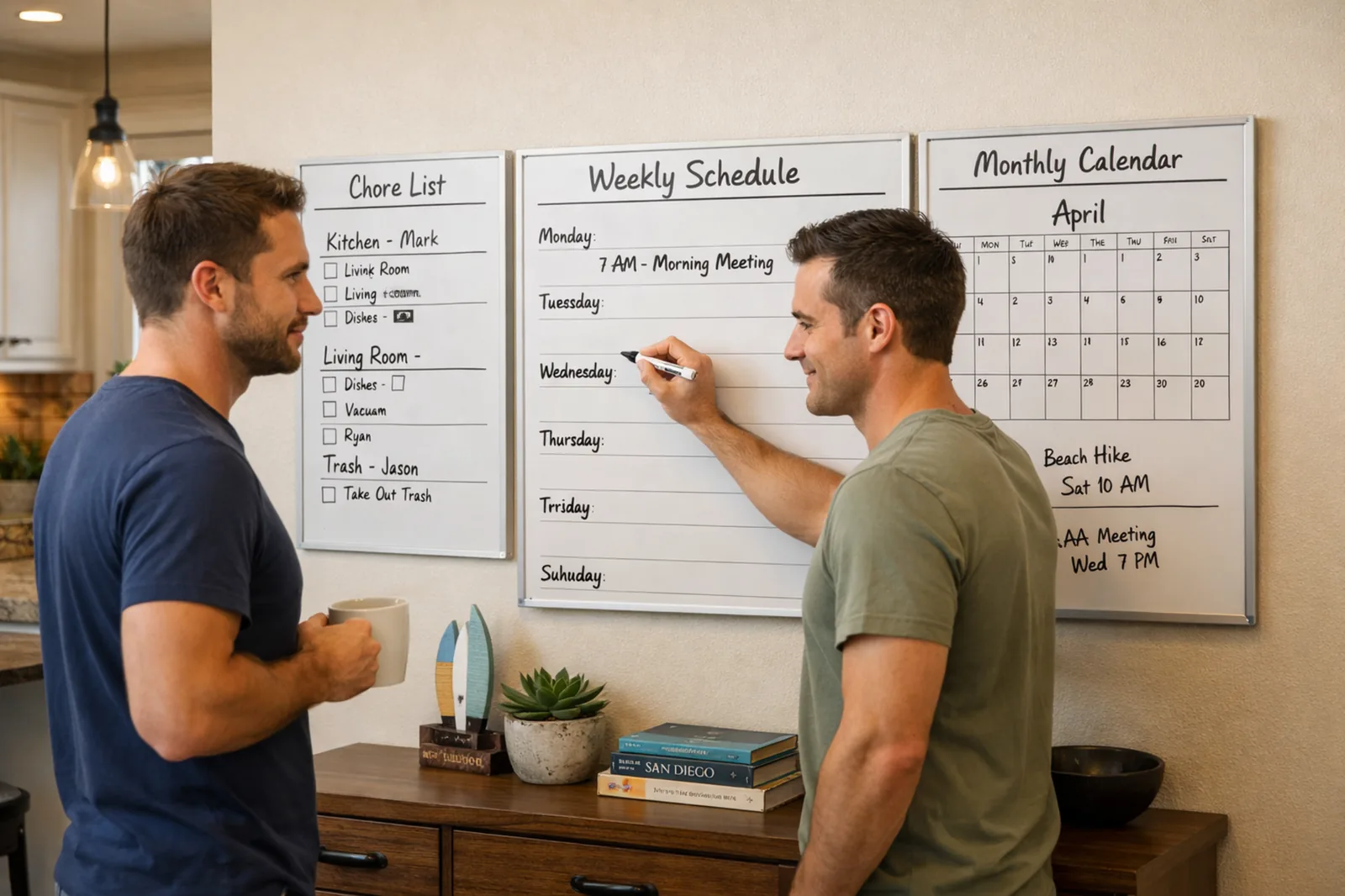
What Summit Push means by structure
Summit Push is built on the idea that recovery weakens when the day has too many empty pockets. Strong structure gives the week enough shape for healthier behavior to hold.
The goal is not dependence on the house. It is to make daily discipline strong enough to hold later in work, school, and adult life.
What structured sober living should cover
Good structure shows up in house rules, the schedule, leadership, and the way the home responds when something starts slipping.
Wake times, meetings, work hours, chores, fitness, and house responsibilities create a predictable baseline.
Testing and monitoring reduce ambiguity and help protect both the resident and the rest of the house.
Strong homes make sure leadership notices drift, keeps standards real, and does not leave the entire operating model to resident guesswork.
When a resident pulls back, the house should notice early and respond with clarity rather than denial.
Explore the site
See how this fits the full model.
Brotherhood, accountability, and fit.
Read moreWhy environment and neighborhood matter.
Read morePrivacy, stability, and premium routines.
Read moreHow the bridge from treatment should work.
Read moreNorth County and Rancho Bernardo angle.
Read moreA practical decision guide for families.
Read moreFrequently asked questions
Quick answers for faster comparison.
It often includes curfews, house responsibilities, meetings, testing, documented participation, check-ins, and a clearer plan for work, recovery, and daily routine.
Treatment often provides an organized environment. Without a bridge, many people lose momentum when daily life suddenly becomes wide open again.
Yes. The strongest environments pair standards with encouragement and help people practice consistency instead of just policing them.
Ask how expectations are tracked, what happens when engagement drops, and whether anyone notices problems early or only after things go badly wrong.
Take the next step
If this model feels aligned, reach out and start the conversation.