
01
Fit review
Admissions looks at recovery stability, fit for sober living, willingness to follow structure, medication transparency, and how work, school, treatment, and transportation fit the plan.
Program overview
Summit Push gives men a serious next step after treatment, relapse, or instability. The program combines structure, sobriety accountability, recovery participation, and real progress toward independent life.
Built for momentum. Residents gain stability, discipline, and independence through onboarding, feedback, earned trust, and rising responsibility.
At a glance
Summit Push is built to stabilize the handoff between treatment and independent life. Residents are expected to live sober, follow structure, stay honest, participate in recovery, and show visible progress in real life.
How the program works
Easy to understand on the surface. Tight underneath.
Admissions looks at recovery stability, fit for sober living, willingness to follow structure, medication transparency, and how work, school, treatment, and transportation fit the plan.
Residents begin with orientation, room setup, schedule review, financial expectations, a first-week plan, and a practical look at triggers and support needs.
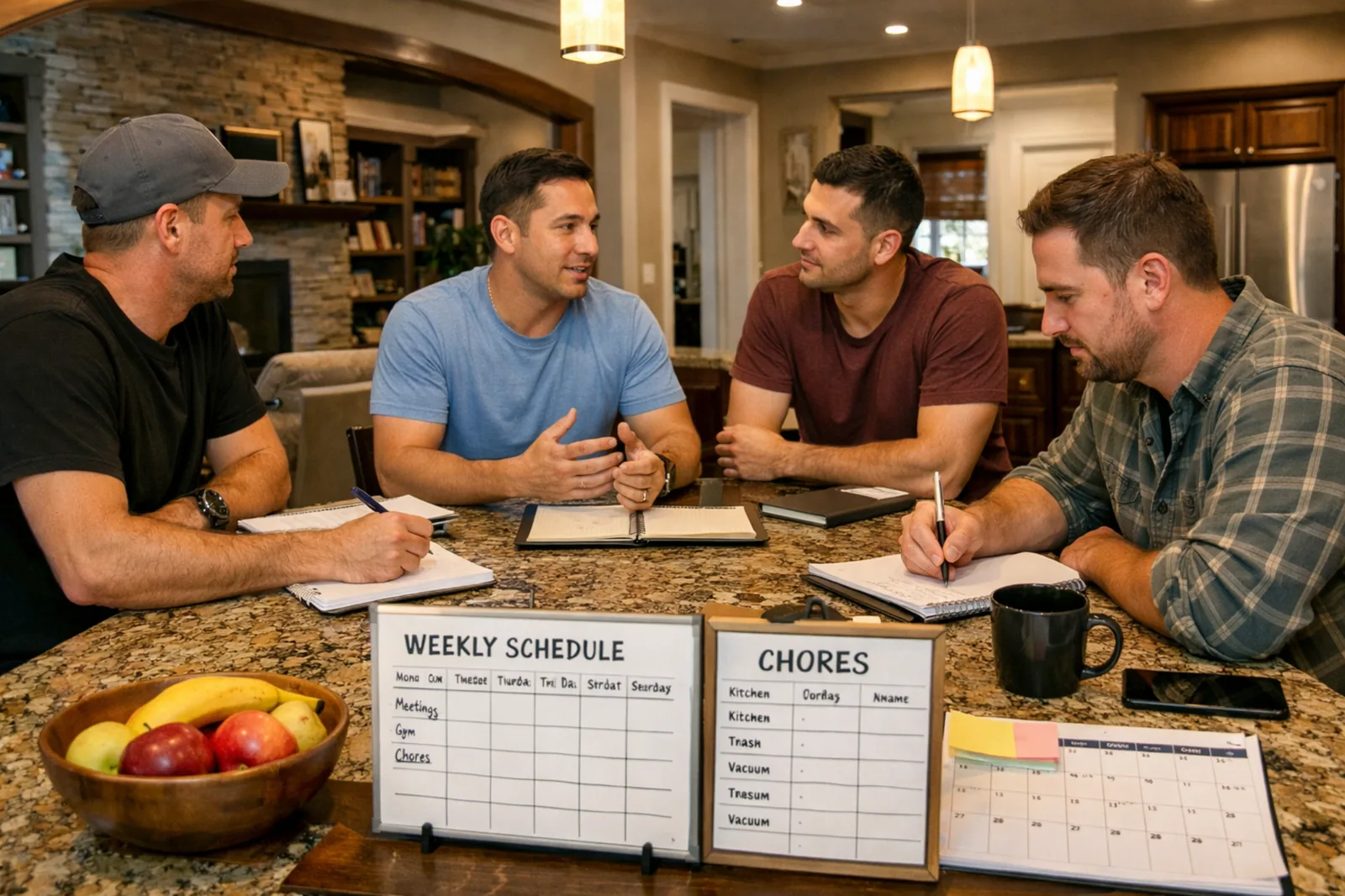
Daily routine is paired with house meetings, progress review, room inspection, recovery-plan refresh, and level-based feedback.
Standards and support
Residents are not expected to guess what matters. Expectations are communicated directly and followed through consistently.
Curfew, quiet hours, chores, room condition, visitor control, approved passes, communication discipline, and schedule transparency are part of daily life.
Testing, search policy when indicated, incident response, and escalation to higher care are structured so the house does not drift into denial when something serious happens.
Appointments, meetings, work, school, court, treatment, and pharmacy needs are coordinated with approval, timing, check-ins, and driver safety in mind.
The Summit Push model
This page stays at the overview level. The deeper pages break each part of the model down in more detail.
Residents follow a clear weekly plan and house standards that do not drift into guesswork.
Sobriety is protected with real follow-through, not crossed fingers.
The house is built to keep recovery active and peer culture strong.
Summit Push is designed to help men move forward in the parts of life that keep sobriety durable.
Why this level of structure works
Research and lived experience both point in the same direction: men do better when recovery includes consistent accountability, peer support, routine, meaningful engagement, and clear case-management follow-through. Summit Push pairs those principles with professional operating discipline.
Residents are less likely to slip into secrecy or disengagement when staff and peers know what is happening day to day.
Schedules, meetings, gym time, chores, and transportation keep recovery grounded in action instead of vague intention.
Brotherhood, sponsor connection, and weekly house meetings help residents stay connected and practice recovery in relationship.
Testing, attendance tracking, and written reports give families, probation, and the resident real visibility into growth.
Take the next step
The site gives the model. A call helps sort out fit, timing, and needed structure.